How to Make Art Batts on a Drum Carder: Color, Texture and Layering
Layer color, locks, silk and sparkle on your drum carder to build bold, textured art batts for art yarn and felting. Techniques, fiber ideas and the mistakes to avoid.
The Workshop Team
Wool Drum Carder · March 12, 2026
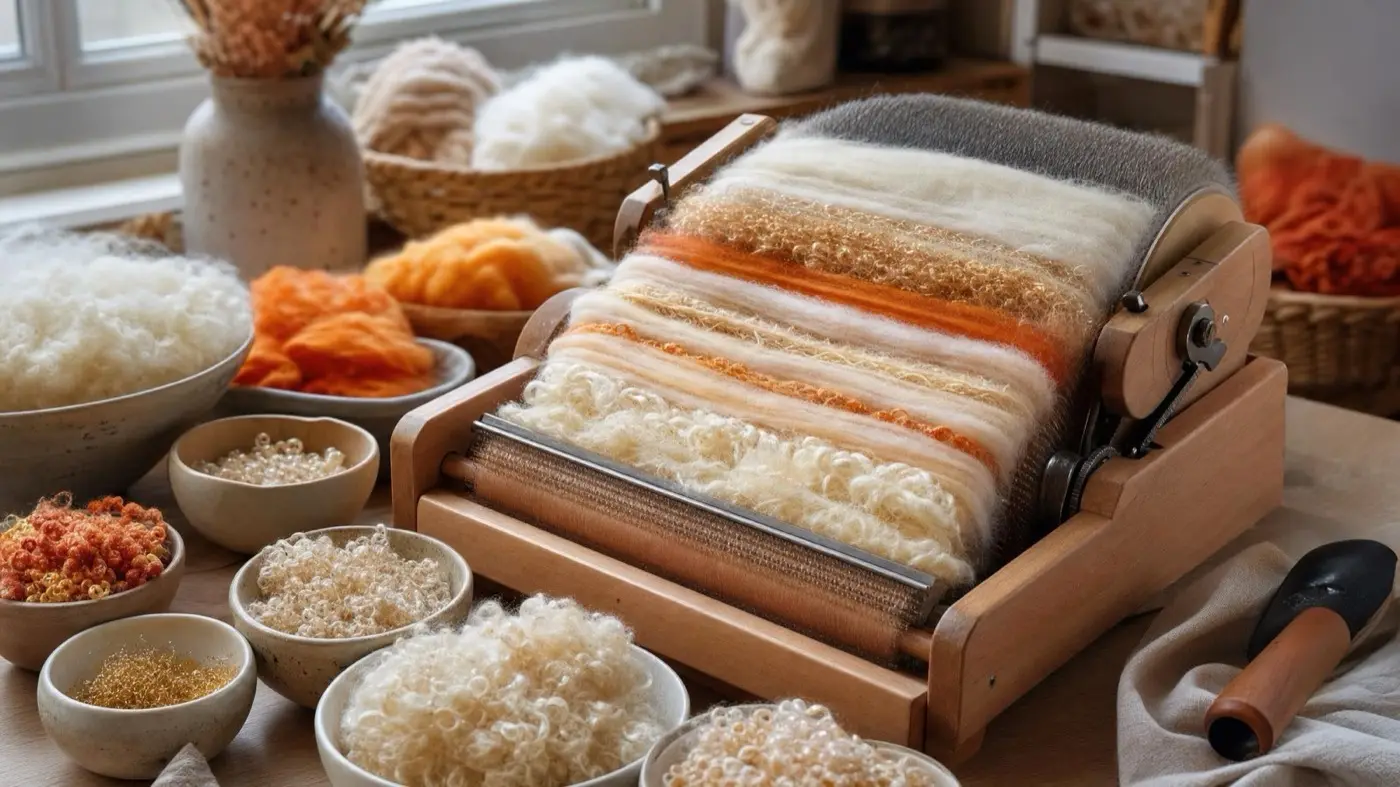
A colorful, textured art batt with locks and silk lifted off a drum carder
Art batts break the usual rule of carding. Instead of aiming for a perfectly even blend, you build visible layers of color and texture on purpose. The result spins into one-of-a-kind art yarn or makes rich, painterly felt.
1. Plan a color story
Start with a base fiber that makes up most of the batt, such as a dyed wool top or a soft Merino. Then choose two or three accent colors and one or two texture elements.
A simple palette usually looks better than a rainbow. Analogous colors next to each other on the color wheel blend gracefully, while a small amount of a contrasting color makes the batt pop.
2. Add texture
Popular add-ins include curly locks (Wensleydale, Teeswater, mohair), sari silk threads, silk noil, nepps, firestar or other sparkle fibers, and bits of colored fiber.
Coarser cloth handles these much better. A 48 TPI carder such as the Art Batt 48 Drum Carder grips long locks and chunky add-ins without clogging the cloth, which is why many art-batt makers keep a coarse carder alongside their standard one.
“For art batts, fewer passes are better. Every extra pass blends the layers and smooths away texture.”
3. Build the batt in layers
Feed a thin base layer first, then lay accent colors and texture on top in stripes or patches. Lay locks across the infeed tray so the main drum catches them, or press them directly onto the main drum by hand.
Finish with another thin base layer to hold everything together. Usually one pass is enough. If you want a little more blending, split the batt and card it once more.
4. Common mistakes
Too many add-ins make a batt that falls apart when you spin it, so keep the base fiber at roughly two-thirds or more of the batt. Very slippery fibers like silk and sparkle should be spread thinly between wool layers.
Clean the cloth well between batts, especially when you change colors. A strand of a strong color left on the drum can turn up in your next batt.
Key Takeaways
- Choose one base fiber, two or three accent colors and one or two textures.
- Coarse 48 TPI cloth handles locks and add-ins without clogging.
- Build in thin layers and card only once or twice to keep the texture.
- Keep the base fiber dominant so the batt holds together when spun.
The Workshop Team
· Wool Drum CarderThe people who design, build and test every Wool Drum Carder in our workshop, sharing what we have learned from years of carding wool, alpaca and everything in between.