How to Choose a Drum Carder: TPI, Drum Width and Drive Explained
48, 72 or 120 TPI? 6, 8, 12 or 16 inches? Hand crank or electric? A practical buyer's guide that matches the right drum carder to the fibers you actually spin.
The Workshop Team
Wool Drum Carder · March 18, 2026
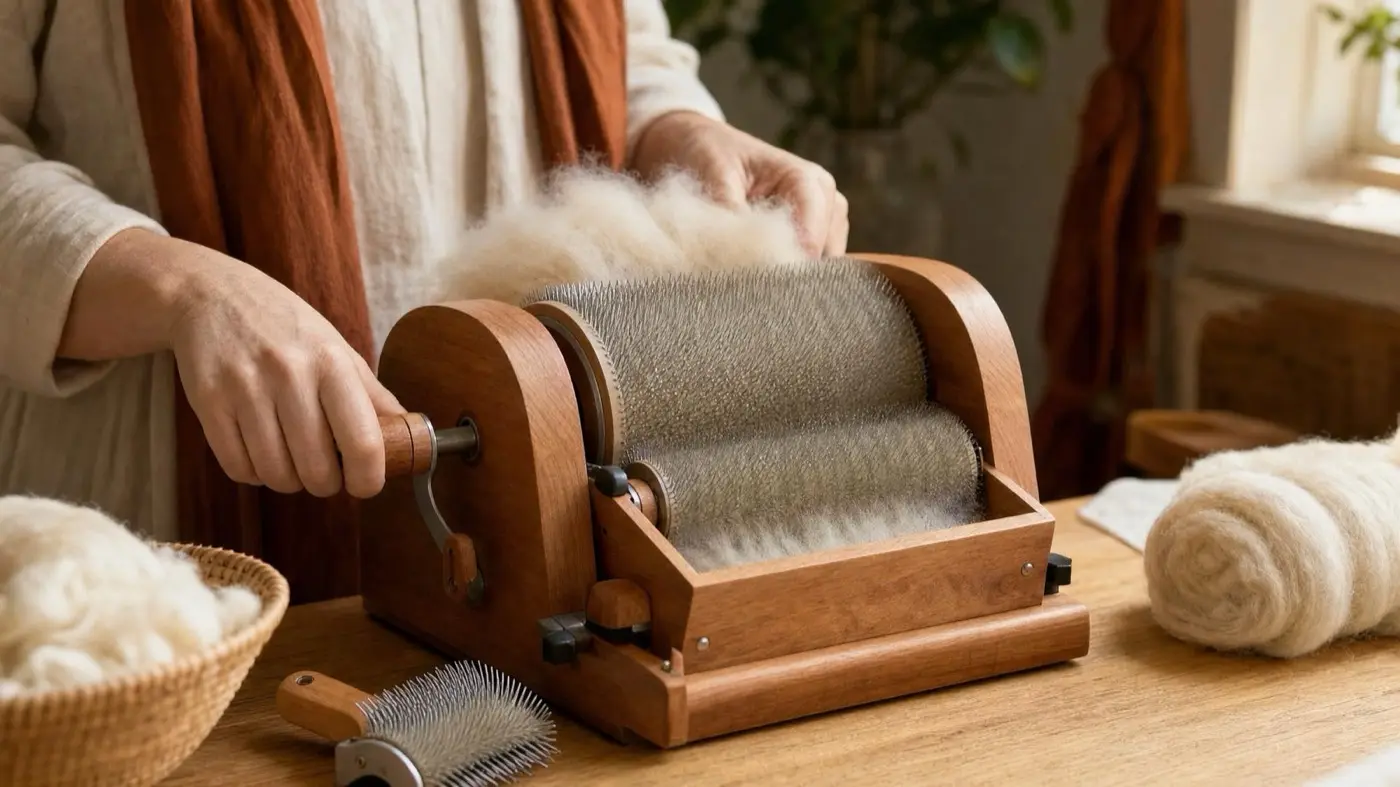
Close-up of carding cloth teeth on a wooden drum carder holding a soft wool batt
A drum carder is one of the biggest purchases most hand spinners make, and the spec sheets can be confusing. The good news is that only a few choices really matter: the carding cloth (measured in TPI), the width of the drum, and how the drums are driven. Get those three right for the fibers you love, and almost any well-made carder will serve you for decades.
1. Carding cloth: what TPI means
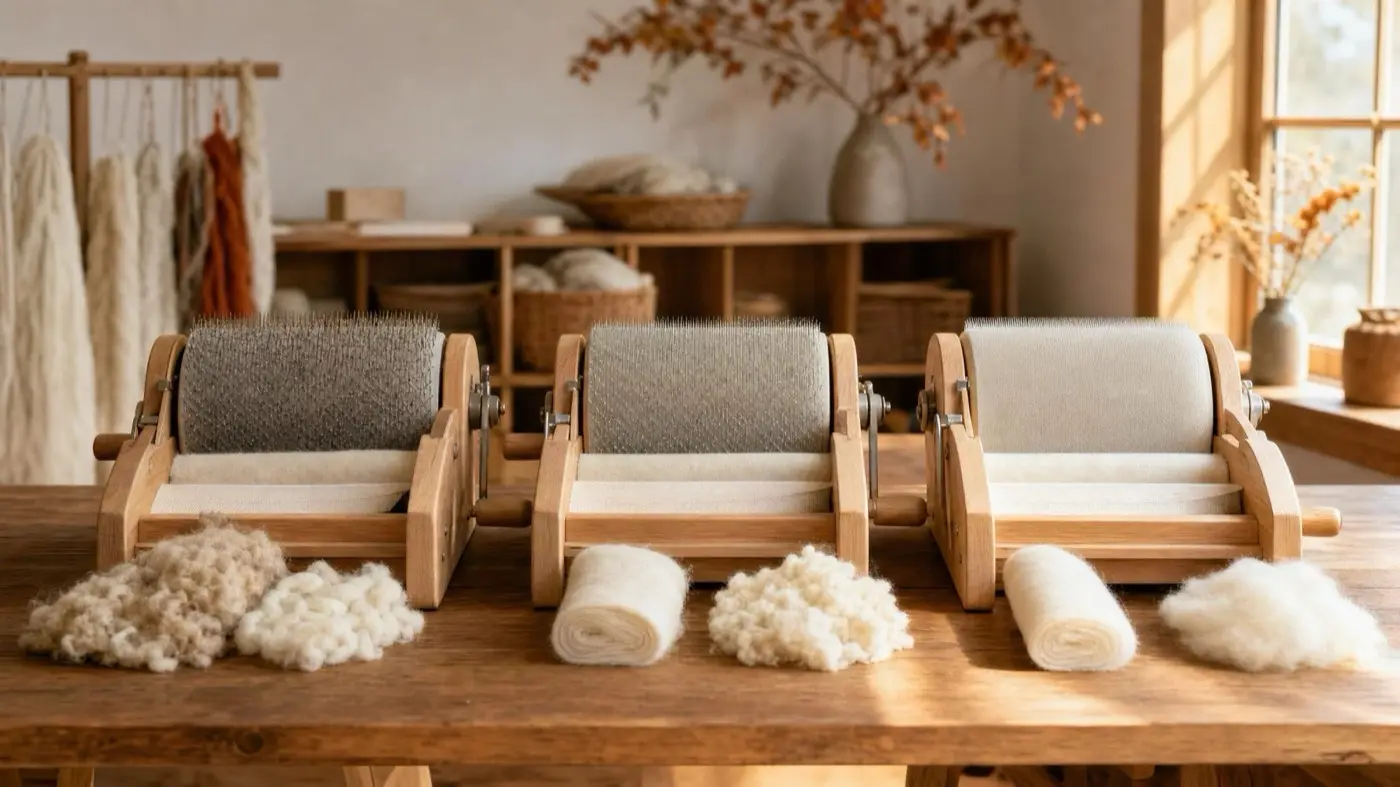
TPI stands for teeth per inch, the density of the wire teeth on the carding cloth. Fewer, wider-spaced teeth grip long, coarse fiber and chunky add-ins. More, finer teeth catch and align short, delicate fiber. Picking the cloth is the most important decision, because it decides which fibers your carder handles well.
Coarse cloth around 48 TPI suits long-wools such as Wensleydale, Teeswater, Lincoln and mohair locks, plus textured art batts with sari silk, nepps or locks. Medium cloth around 72 TPI is the all-rounder: it handles most medium and fine wools, Corriedale, Romney, BFL, Merino and common blends. Fine cloth around 120 TPI is made for short, fine, slippery fibers like alpaca, cashmere, yak, angora, camel and silk.
“If you spin mostly wool and blends, choose 72 TPI. If you work mainly with luxury fibers, choose 120. If you love bold, textured art batts, choose 48.”
2. Drum width: batt size versus footprint
Drum width decides how much fiber each batt holds. A 6″ drum makes small batts and fits easily on a shelf, which is great for sampling colorways or tight spaces. An 8″ drum is the standard size, with batts of roughly an ounce. A 12″ drum makes batts about 50% larger, and a 16″ drum is designed for small farms and fiber businesses carding whole fleeces.
Wider is not automatically better. A wide drum takes more effort to crank when full and needs more table space. If you card a few batts a week, an 8″ drum is usually the sweet spot. If you process whole fleeces regularly, a wider drum saves real time.
3. Drive: hand crank, ratio and electric
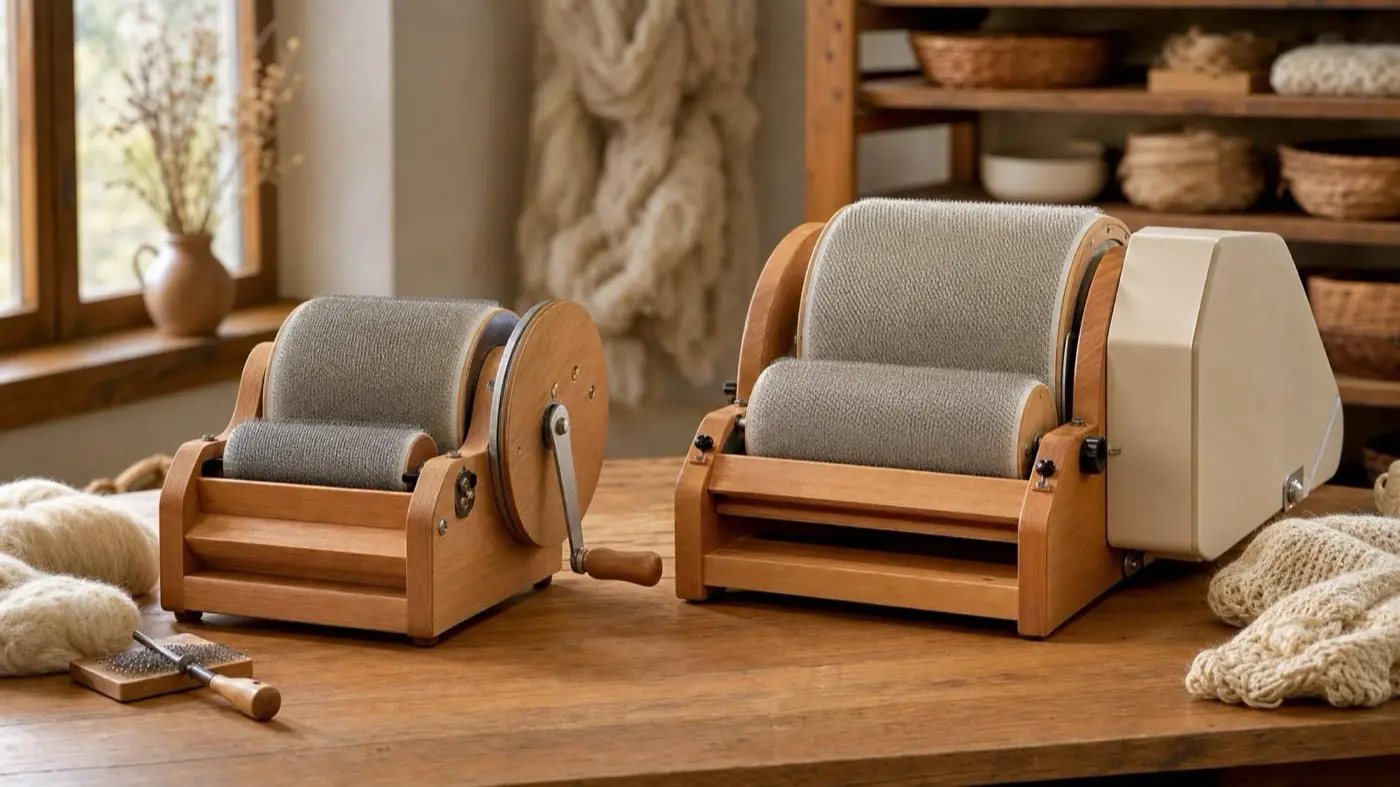
Hand-crank carders use a belt or chain to turn the small licker-in drum and the large main drum at different speeds. The drive ratio, for example 6:1, describes that speed difference. A higher ratio transfers fiber quickly and suits general wool carding. A lower ratio, such as 4:1, gives you more control with delicate fibers.
Electric carders replace the crank with a motor, usually with variable speed and a foot pedal. That leaves both hands free to feed fiber and removes wrist and shoulder strain. If you card for long sessions, sell batts, or have joint pain, an electric carder is worth the extra cost.
4. Build quality details worth checking
Look for a solid hardwood frame that does not flex, sealed or precision bearings, an adjustable gap between the licker-in and main drum, and secure table clamps. A doffing strip (a gap in the cloth on the main drum) makes it much easier to lift the batt off.
Ask what accessories are included or available: a doffer or batt picker, a cleaning brush, and an optional packer or burnishing brush, which presses fiber into the cloth so the drum holds more.
5. Matching a model to your spinning
For most spinners the Classic 8″ Drum Carder with 72 TPI cloth is the right first carder. Spinners who mostly work with alpaca or cashmere should look at the Fine Fiber 120 Drum Carder, and art-yarn makers at the Art Batt 48 Drum Carder. If you process whole fleeces, consider the Wide 12″ Drum Carder. If cranking is a problem, choose the Electric Drum Carder Pro, and for farm-scale volume, the Mill 16″ Electric Drum Carder.
Still unsure? Tell us which fibers you spin and how much you card in a typical week, and we'll recommend a cloth and size before you order.
Key Takeaways
- TPI (teeth per inch) is the most important choice: 48 for coarse and art batts, 72 for general wool, 120 for fine luxury fibers.
- An 8″ drum suits most spinners; choose 12″ or 16″ only if you card whole fleeces regularly.
- A lower drive ratio gives more control with delicate fiber; electric drives free both hands.
- Check for a rigid hardwood frame, good bearings, an adjustable gap and a doffing strip.
The Workshop Team
· Wool Drum CarderThe people who design, build and test every Wool Drum Carder in our workshop, sharing what we have learned from years of carding wool, alpaca and everything in between.