Not a gadget.
A fiber tool built to last a lifetime.
We are a small workshop of woodworkers and spinners. We started building drum carders because we wanted one that cranked smoothly, held its drum gap true and looked beautiful on the studio table. Today every carder we ship around the world is still cut, fitted, finished and tested by hand, one at a time.
Material
Solid Hardwood
No MDF, no veneer
Mechanism
Sealed Bearings
Smooth, quiet, true-running
Carding Cloth
48 · 72 · 120 TPI
Matched to your fiber
Warranty
5-Year Frame
Lifetime repair support
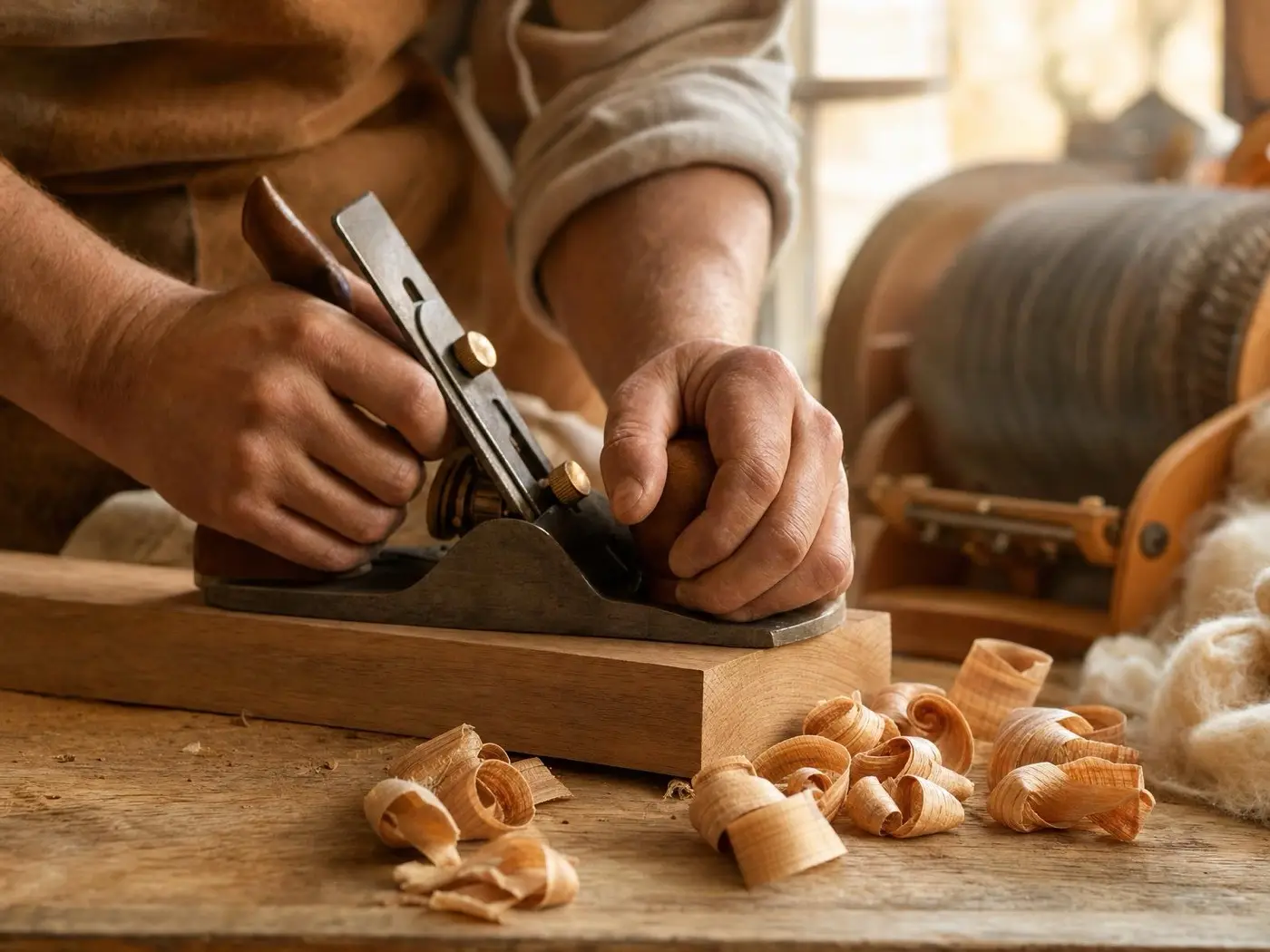
“Before we cut a single board, we read the grain. A carder should outlive its first fleece by generations.”
The Wool Drum Carder Workshop
Our Craft Principles
Beautiful fiber deserves
a tool made with the same care.
Hand spinners and felters put hours into every fleece. We think the carder should be as considered as the yarn: solid hardwood, precise mechanics and honest materials.
Solid Wood, Not Sheet Goods
Our frames are cut from kiln-dried beech, cherry and black walnut, never MDF or plywood. Solid hardwood stays rigid under load, holds screws for decades and only gets more beautiful with use.
A Drum Gap That Stays True
Every drum is balanced and runs on sealed bearings, and the gap between the licker-in and main drum is set by hand. That keeps cranking smooth and quiet, and keeps fiber from wrapping.
Cloth Matched to Fiber
Coarse cloth for long-wools and art batts, medium for everyday wool, fine for alpaca, cashmere and silk. We help you choose the right teeth for the fibers you actually spin.
Built to Be Passed Down
Belts, cloth and bearings can all be replaced, and we stock spare parts for every model we make. A Wool Drum Carder is a tool you hand on to the next spinner, not one you throw away.
How Every Carder Is Made
From rough board to first batt,
five steps on our bench.
Nothing is outsourced to a factory line. From the first cut of timber to the final test batt, every step happens in our own workshop.
Selecting the Hardwood
We choose kiln-dried beech, cherry and black walnut board by board, looking for straight, stable grain. That way the frame stays square and the drum gap stays true for decades.
Cutting & Joinery
Side plates, base and braces are cut, drilled and joined in our workshop. The bearing seats are machined precisely, so both drums sit perfectly parallel.
Balancing & Clothing the Drums
Each drum is turned, balanced and wrapped by hand with carding cloth (48, 72 or 120 TPI), stretched evenly and secured so the teeth sit tight and true across the full width.
Drive, Gap & Test Carding
We fit the belt or chain drive (or the motor on electric models), set the drum gap by hand and card real wool on every machine before it leaves the bench.
Hand-Rubbed Oil & Wax
We finish every frame with natural hard wax oil, rubbed in by hand in several coats. It is warm to the touch, easy to refresh and never feels plasticky.
Honest Materials
What Our Carders Are Made Of
European Beech
Fagus sylvatica
Dense, pale and very stable. Beech holds screws and bearings firmly and wears beautifully, which is why we use it for our everyday workhorse models.
American Black Walnut
Juglans nigra
Rich chocolate tones and flowing grain. Reserved for our Heirloom edition and custom orders, it deepens into a warm patina with years of use.
Solid Brass Fittings
Crank, knobs & plate
The crank handle, adjustment knobs and maker's plate are solid brass, heavy in the hand and slowly gaining a soft golden patina as you work.
The Journey of Your Carder
From your first message
to a lifetime of batts.
Every carder is built to order for a specific spinner. Here is what happens between the day you order and the day you pull your first batt, and long after.
Your Order & Fiber Chat
Tell us what you spin and felt. We help you choose the drum width, carding cloth and wood, then confirm your build slot.
Timber & Frame
Your frame is cut from kiln-dried hardwood, the bearing seats are machined, and the joinery is fitted and glued.
Drums & Mechanism
The drums are balanced and clothed by hand, the drive is fitted, and the drum gap is set and checked.
Test Carding & Shipping
We card real wool on your machine, finish it in hard wax oil and pack it in a custom box for insured, tracked delivery.
Spare Parts & Support
Belts, cloth, bearings and brushes are always in stock, and our makers are an email away whenever you need help.
Visit, Video Call or Write to Us
Meet the makers
behind your carder.
Not sure which cloth or drum width is right for you? Book a live video call to see the carders working, visit the workshop by appointment, or just send us a question about your fibers.
Let’s plan a conversation.
Talk one-on-one with the people who build your carder: see the drums turning on video, compare wood samples or discuss a custom build.
Live Video Demo
Watch the carders running on a video call and see how different cloths handle wool, alpaca and art-batt add-ins.
Workshop Visit by Appointment
Bring a bag of your own fleece, crank the carders yourself and choose your wood in person.